Keep Doing
Preserve effective habits at their current level.
Example cards
- Keep the release checklist.
Keep in mind: Name what works rather than writing generic praise.
Go beyond start, stop, and continue. Use five focused prompts to decide which habits to keep, increase, reduce, stop, or introduce.

Drag example cards between columns or try voting to explore the format.
Preserve effective habits at their current level.
Keep our release checklist.
Increase something that is already useful.
More pairing on unfamiliar code.
Reduce frequency or scope without removing a practice entirely.
Fewer status meetings during focus time.
Remove practices that no longer provide enough value.
Stop manually copying release notes between tools.
Propose a new habit or a small experiment.
Start testing migration scripts in staging.
Use these prompts and example cards to start a focused conversation.
Preserve effective habits at their current level.
Example cards
Keep in mind: Name what works rather than writing generic praise.
Increase something that is already useful.
Example cards
Keep in mind: Do not duplicate Start Doing ideas for practices you have never tried.
Reduce frequency or scope without removing a practice entirely.
Example cards
Keep in mind: Explain what a useful reduction would look like.
Remove practices that no longer provide enough value.
Example cards
Keep in mind: Check dependencies before eliminating a practice.
Propose a new habit or a small experiment.
Example cards
Keep in mind: Avoid starting more experiments than the team can evaluate.
Starfish takes about 30–45 min. Here's the flow.
Clarify the difference between More Of, Less Of, and the other columns.
Add specific observations and ideas. There is no requirement to fill every column.
Prioritize cards, group related ideas, and explore why people placed similar topics in different columns.
Agree on one or two changes, assign owners, and define when to review the results.
A Starfish retrospective gives teams five ways to talk about how they work: Keep Doing, More Of, Less Of, Stop Doing, and Start Doing. The extra nuance helps when a practice is useful but happens too often, or when something works well and deserves more attention.
Keep Doing protects effective habits. More Of and Less Of adjust the frequency or scope of existing practices. Stop Doing removes waste, while Start Doing introduces an experiment. In LetRetro, each prompt is a separate column with its own color, making the distinctions visible while the team adds cards.
Choose Starfish when Start/Stop/Continue feels too binary or familiar. Ask for specific observations before proposing changes, then vote on the most useful experiments. If the same topic appears in conflicting columns, use that disagreement to understand different needs rather than deciding that one card is wrong.
If you like Starfish, you might also enjoy these formats.
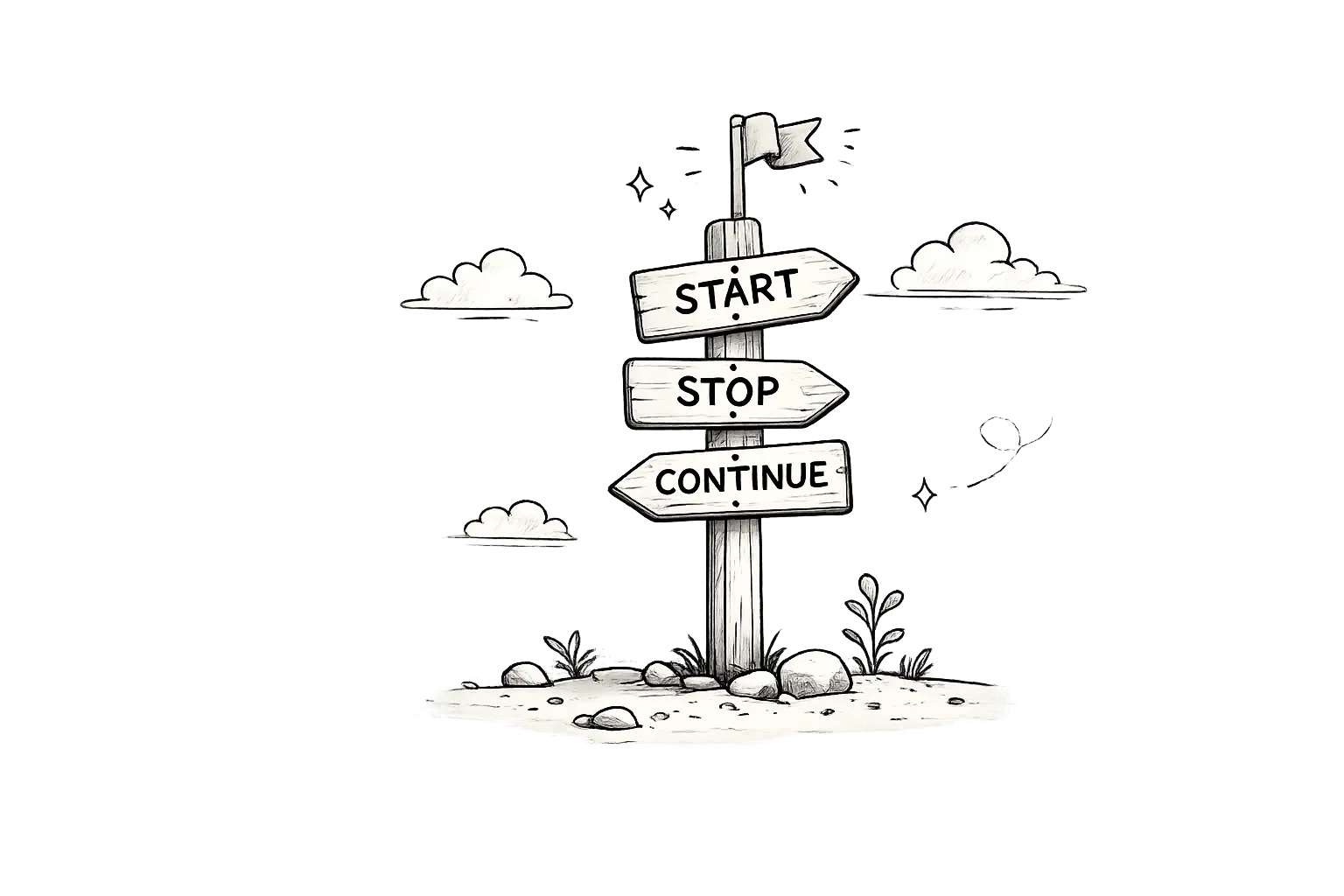
A classic three-column retro format that helps teams identify new practices to adopt, unhelpful habits to drop, and winning behaviors to reinforce.
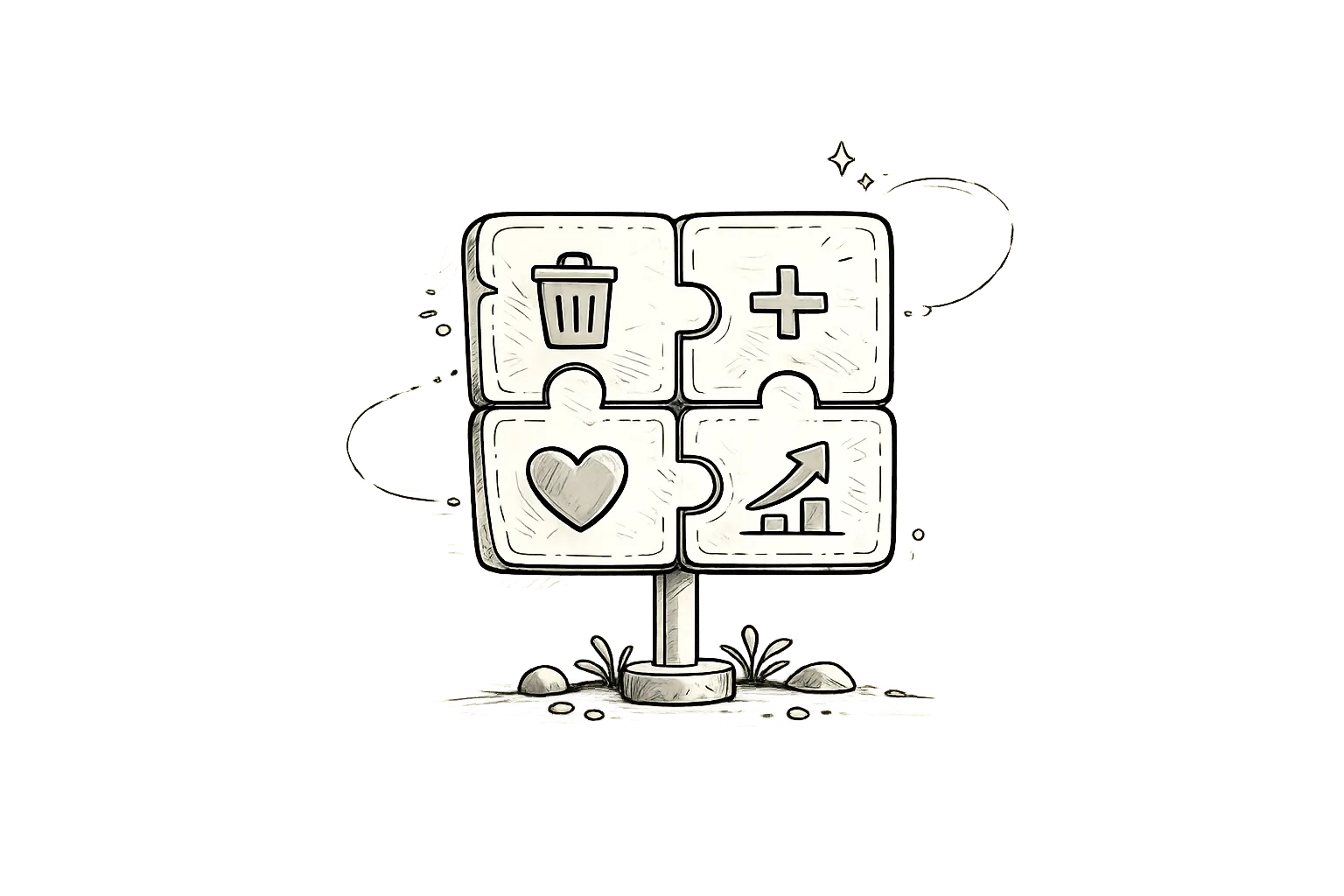
A four-column continuous improvement format — Drop, Add, Keep, Improve — that combines Start/Stop/Continue simplicity with actionable improvement granularity.

Reconstruct the story of your sprint. Capture what happened at the beginning, middle, and end, then turn the patterns into practical takeaways.

Make recognition specific. Thank the people who helped, celebrate shared wins, and recognize contributions that made a meaningful difference.
Keep Doing, More Of, Less Of, Stop Doing, and Start Doing.
Starfish adds More Of and Less Of. These prompts help teams adjust a useful practice without treating keeping or stopping it as the only choices.
Ask what each participant experienced. Different placements can reveal different needs, and the team can agree on a more specific experiment.
Yes. Starfish is a built-in template available on the Free plan, subject to board and member limits.
Free forever plan. Start running better retrospectives in under 2 minutes.
Get Started Free