Stoplight Retrospective Template
An intuitive traffic-light retro format — Red for blockers, Yellow for caution, Green for smooth sailing — that makes team health instantly visible at a glance.
See it in action
Drag cards between columns to try the format. Vote on items to see what surfaces.
Stop — what's blocking the team? Critical issues that need immediate attention.
Prod database hitting connection limits — needs immediate scaling
Team is one person short critical path
Third-party API deprecation — migration not started
Caution — what needs monitoring? Issues that aren't critical yet but could become Red.
Documentation is falling behind feature development
On-call rotation is burning out the senior engineers
Test coverage dropped below 60% this sprint
Go — what's working well? Practices, tools, and behaviors to maintain.
Sprint planning is well-organized and focused
Design-review collaboration is excellent
CI pipeline is fast and reliable
How to run it
Stoplight takes about 10–20 min. Here's the flow.
Explain
Red = blockers, Yellow = caution/warning, Green = smooth sailing. Blameless and honest.
Add cards
Team adds cards to all three columns. Encourage at least one card per column.
Vote and group
Vote on items. Reds get priority attention — discuss how to unblock.
Action planning
Focus actions on Reds and Yellows. Greens are good — protect them.
Close
Share a quick summary. If many Reds, schedule a dedicated problem-solving session.
- ✓Treat Red items as must-fix before the next sprint — assign ownership immediately.
- ✓Track the Red/Yellow/Green distribution over time — a trend toward more Red is an escalation signal.
- ✓Give Yellow items deadlines — a Yellow that isn't addressed becomes a Red.
- ✓Celebrate Green items publicly — they're proof that improvement efforts work.
- ✓Use emoji reactions for quick voting if you're running async.
- ✓Pair Stoplight with a deeper format monthly — it's a diagnostic, not a therapy session.
- ✗Treating Yellow as 'not important' — Yellow items are early warning signals.
- ✗Taking Green for granted — what made this sprint green? Protect those practices.
- ✗Allowing Reds to repeat sprint after sprint — escalate recurring Reds to leadership.
- ✗Running Stoplight as the only retro format — it lacks depth for complex issues.
- ✗Letting team members overuse Red for minor issues — Yellow exists for noise.
- ✗Not assigning owners to Red items before the retro ends.
What is a Stoplight retrospective?
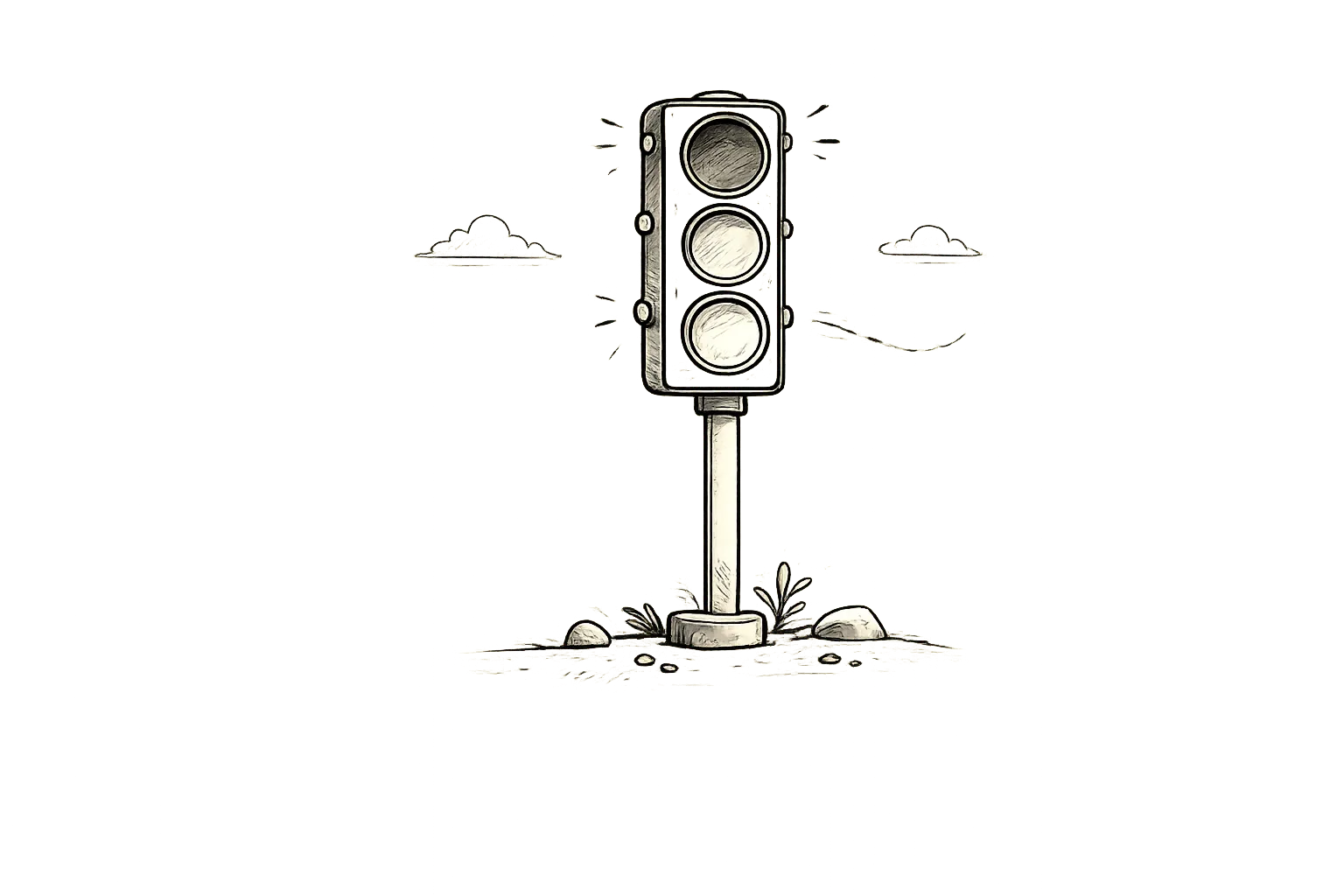
The Stoplight retrospective (also known as Red, Yellow, Green) uses one of the most universally understood visual metaphors: a traffic light. Red means stop — what's blocking the team? Yellow means caution — what needs attention? Green means go — what's working well?
This format's brilliance lies in its intuitive visual nature. Every team member instinctively understands the traffic light metaphor, which means zero onboarding time and immediate participation. The format originated in Lean management and Just-in-Time manufacturing, where shop floor teams used red/yellow/green indicators to signal production line health. It was adapted for Agile retrospectives by facilitators who needed a format that could surface team health signals at a glance.
The psychological advantage of Stoplight is its non-confrontational nature. Team members can signal distress (Red) or concern (Yellow) without having to articulate detailed complaints. For teams with introverted members or power distance dynamics, this low-friction signaling is invaluable. A Red card might just say "API stability" — the team knows what that means without forcing the author to elaborate publicly.
Similar templates
If you like Stoplight, you might also enjoy these formats.
WWW & WNB
A focused two-column retro format — What Went Well and Needs Better — that balances celebration with honest improvement in the shortest possible time.
Start/Stop/Continue
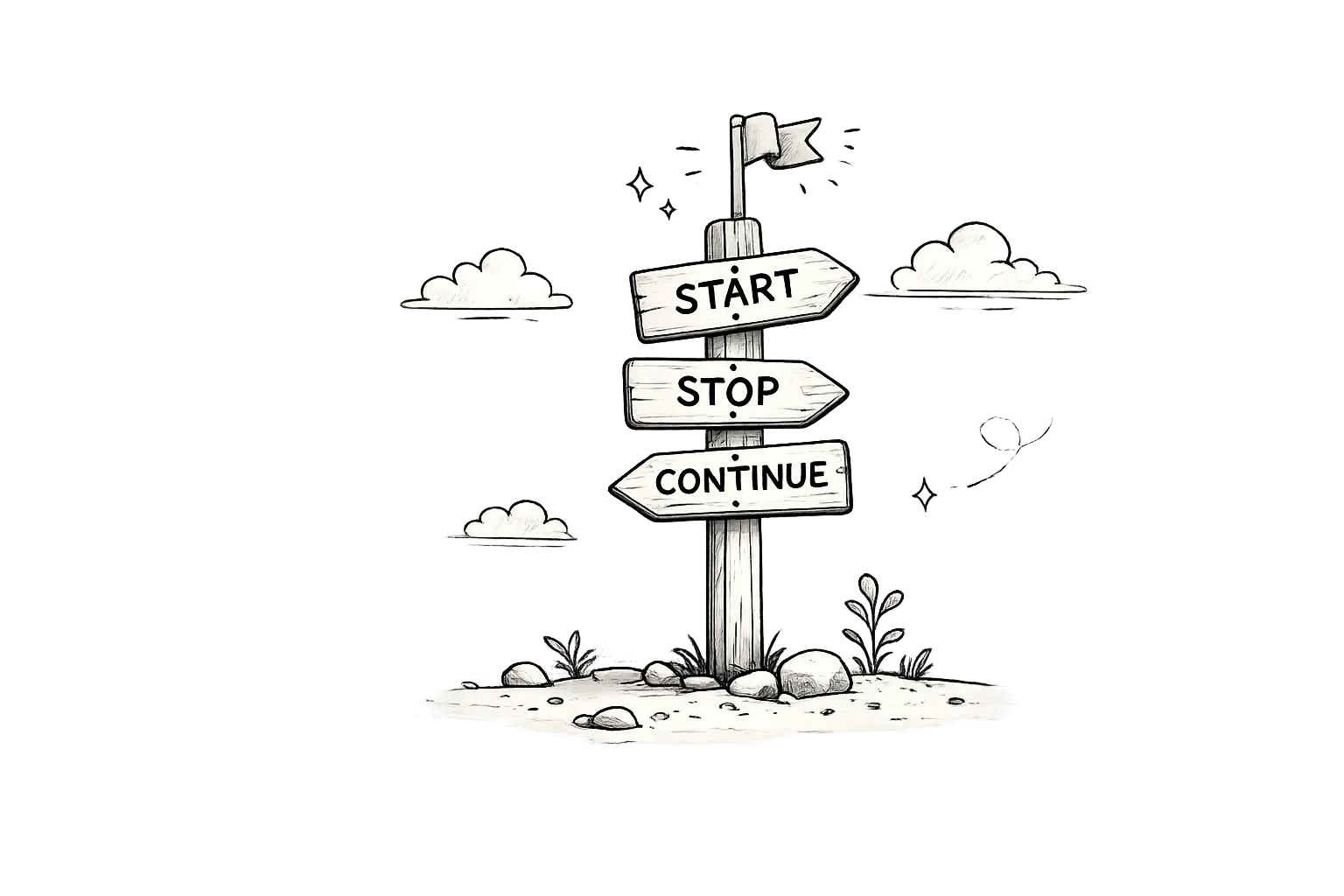
A classic three-column retro format that helps teams identify new practices to adopt, unhelpful habits to drop, and winning behaviors to reinforce.

DAKI
A four-column continuous improvement format — Drop, Add, Keep, Improve — that combines Start/Stop/Continue simplicity with actionable improvement granularity.

Mad/Sad/Glad
An emotion-based retro format that gives team members a safe space to express frustrations, concerns, and wins — building psychological safety and honest communication.
Frequently asked questions
What is a Stoplight retrospective?
Stoplight (Red, Yellow, Green) uses a traffic light metaphor. Red is blockers, Yellow is caution, Green is what's working. It provides an instant visual health check for any team.
How long does a Stoplight retro take?
10–20 minutes. It's one of the fastest formats because the metaphor is immediately understood.
Is Stoplight good for leadership teams?
Yes — leadership teams benefit from the instant visual health check. A board full of Red is an immediate escalation signal.
Can I run Stoplight for remote teams?
Yes — the traffic light metaphor is universal and requires no special context. LetRetro's board makes Red/Yellow/Green signals visible at a glance.
How do I track Red/Yellow/Green over time?
LetRetro automatically tracks column distribution across sprints, giving you a team health trend line.
What if everything is Green?
Celebrate! But also ask: are we being honest? If multiple sprints are all Green, the team may be avoiding difficult conversations.
Run your stoplight retro
Free forever plan. Start running better retrospectives in under 2 minutes.
Get Started Free