4Ls Retrospective Template
A structured four-column retro format — Liked, Learned, Lacked, Longed For — that balances positive reinforcement with honest improvement areas.

See it in action
Drag cards between columns to try the format. Vote on items to see what surfaces.
What did the team enjoy? What went well? Successes and positive moments.
The new deployment pipeline — deployments are boring now
Team retro offsite — great conversations
Pair programming session on the payment module
What did the team discover? New insights, skills, or knowledge gained.
PostgreSQL connection pooling dramatically improved latency
The legacy billing system has undocumented edge cases
Our users strongly prefer keyboard shortcuts over mouse navigation
What was missing? Resources, tools, support, or information the team needed.
Time allocated for addressing tech debt
A proper staging environment that mirrors production
Clear acceptance criteria before sprint planning
What does the team wish for? Aspirations, ideas, and dreams for future sprints.
Automated end-to-end testing for critical user flows
Dedicated product designer embedded in the squad
Monthly hack days for innovation and side projects
How to run it
4Ls takes about 25–35 min. Here's the flow.
Introduction
Explain the four columns. Emphasize that Longed For is aspirational — no budget or feasibility constraints.
Add cards
Team adds cards to each column silently. Aim for at least 2 cards per column.
Vote and cluster
Group related cards and vote. Liked and Learned often cluster together thematically.
Discuss themes
Discuss the top 2-3 themes from each column. Longed For deserves extra discussion time.
Action planning
Convert themes into concrete action items. Assign owners and due dates.
- ✓Start with Liked to set a positive tone before moving to Lacked and Longed For.
- ✓The Learned column is gold for onboarding — document and share it with the wider org.
- ✓Longed For items that keep recurring should be escalated to leadership as strategic signals.
- ✓Use anonymous mode for Lacked to surface honest resource gaps.
- ✓Spend the most time on Longed For — it's where the most creative ideas live.
- ✓Review previous sprint's Longed For items — did anything become reality?
- ✗Running out of time before reaching Longed For — it's the most valuable column.
- ✗Treating Lacked and Longed For as the same column — they're different mindsets.
- ✗Forgetting to document Learned items — they're lost tribal knowledge otherwise.
- ✗Letting Longed For become a complaint session — keep it aspirational.
- ✗Skipping the emotional dimension — Liked is as important as the analytical columns.
- ✗Running this format too frequently (weekly) — the depth demands time between sessions.
What is a 4Ls retrospective?
The 4Ls retrospective — Liked, Learned, Lacked, Longed For — is one of the most comprehensive Agile retrospective formats available. It provides four distinct lenses for examining a sprint, capturing both the rational (Learned) and emotional (Liked, Lacked, Longed For) dimensions of team experience.
Originating from the Lean and Agile continuous improvement tradition, 4Ls was designed to address a common problem with simpler formats: they don't capture enough dimensions of team experience. Start/Stop/Continue is behavioral but lacks emotional depth. Mad/Sad/Glad is emotional but lacks learning capture. 4Ls bridges both worlds, making it a favorite of product teams and Scrum Masters who need a complete picture of sprint health.
The psychological framework behind 4Ls is rooted in experiential learning theory. The Learned column captures explicit knowledge transfer. Liked reinforces positive experiences through gratitude and recognition. Lacked creates space for identifying resource or support gaps. Longed For taps into aspirational thinking — what could the team achieve if constraints were removed? Together, these four columns create a complete learning cycle: experience, reflect, identify gaps, aspire.
Similar templates
If you like 4Ls, you might also enjoy these formats.

Mad/Sad/Glad
An emotion-based retro format that gives team members a safe space to express frustrations, concerns, and wins — building psychological safety and honest communication.

DAKI
A four-column continuous improvement format — Drop, Add, Keep, Improve — that combines Start/Stop/Continue simplicity with actionable improvement granularity.
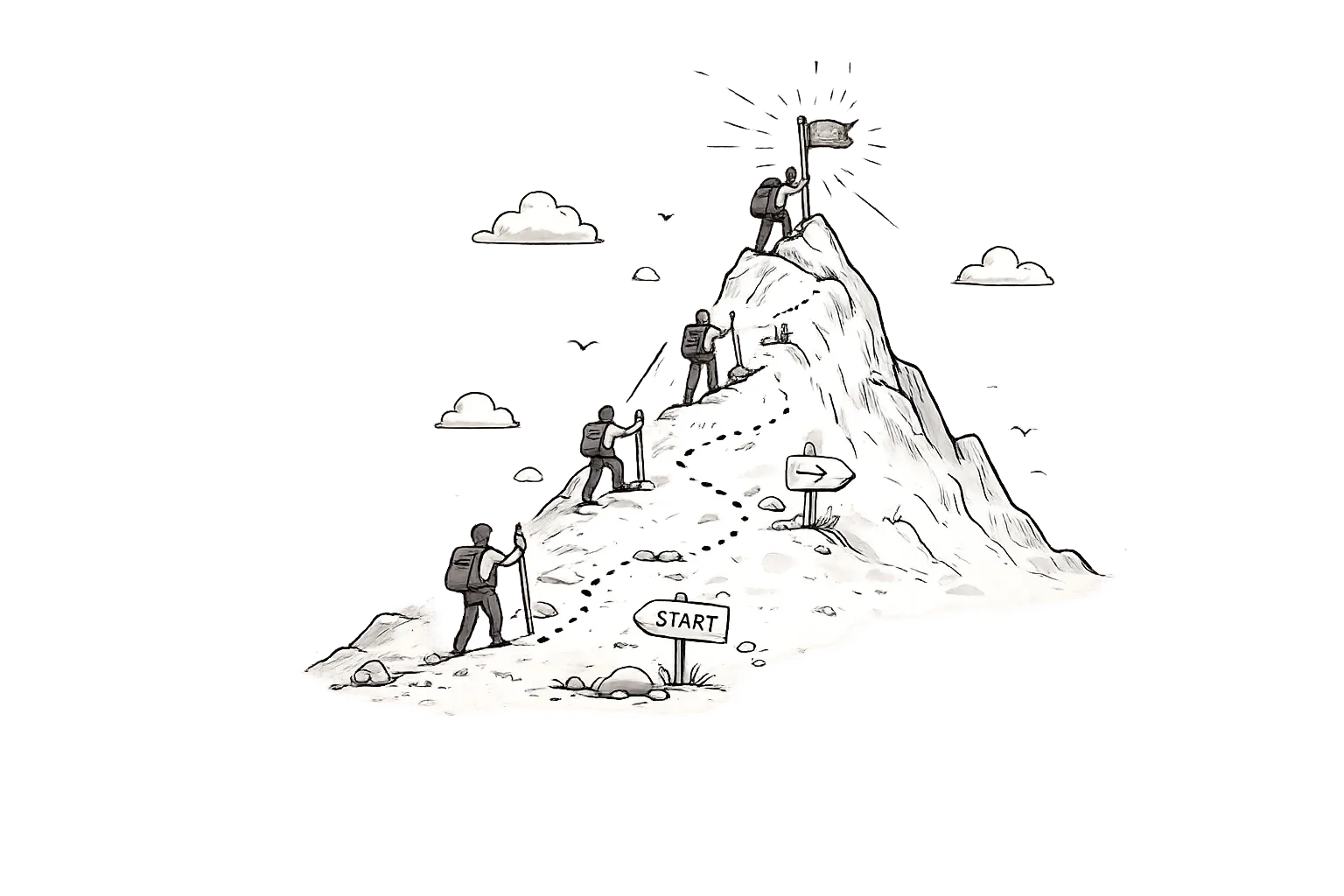
Mountain Climb
A forward-looking retrospective format that helps goal-oriented teams reflect on progress, identify blockers, and plan the next sprint like climbing a mountain.

WWW & WNB
A focused two-column retro format — What Went Well and Needs Better — that balances celebration with honest improvement in the shortest possible time.
Frequently asked questions
What is a 4Ls retrospective?
4Ls is a retrospective format with four columns: Liked, Learned, Lacked, and Longed For. It captures both emotional responses and analytical insights from a sprint.
How is 4Ls different from Start/Stop/Continue?
4Ls adds Learned and Longed For, which capture knowledge and aspirations. It's deeper and takes longer, making it better for quarterly or monthly retros.
How long should a 4Ls retro take?
25–35 minutes is recommended. The extra column adds depth but also time — don't rush the Longed For discussion.
Is 4Ls good for remote teams?
Yes — LetRetro's async boards let remote team members contribute to all four columns asynchronously, with real-time discussion scheduled for top-voted items.
What if every team member writes the same thing?
That's useful data — repeated themes across Liked or Lacked columns are strong signals for action. Cluster them and prioritize.
Can AI help with 4Ls retrospectives?
LetRetro's AI identifies patterns across all four columns, tracks Longed For items that keep recurring, and generates summary reports for stakeholders.
Run your 4ls retro
Free forever plan. Start running better retrospectives in under 2 minutes.
Get Started Free